
World Cup Controversies Through the Years
Check out the list of the most sensational World Cup controversies, from the Hand of God goal to refereeing dramas that changed football history.
World Cup Controversies – m88worldcups.com – Who does not know this biggest football tournament in the world?
Yes, the World Cup, this four-year tournament always delivers surprises that delight football fans around the globe.
However, behind the dazzling spectacle of the World Cup, there are also many controversies that have occurred throughout the tournament.
One of them took place in the 2002 World Cup, where Italy, filled with football superstars of its era, had to exit at the hands of South Korea in the Round of 16 due to several controversial refereeing decisions.
In addition, we also certainly remember the “Hand of God” incident by Diego Maradona when Argentina faced England in the quarter-finals of the 1986 World Cup.
With so many controversies occurring in this tournament, we have compiled several World Cup controversies through the years that are certainly very interesting to explore.
Let us take a look at the review together!
The Most Sensational World Cup Controversies
1. 1934 World Cup
World Cup controversies had already appeared as early as the second edition of the tournament in 1934, when defending champions Uruguay decided to boycott the tournament held in Italy.
This decision arose due to Uruguay’s dissatisfaction with the organization of the 1930 World Cup. At that time, only a few European teams participated in Uruguay because the cost of bringing a team to another continent was very high.
This led Uruguay to feel that their victory was not properly recognized internationally and as a form of protest, the Uruguay national team chose not to travel to Europe to defend their title.
As a result, Uruguay became the only World Cup champion to fail to defend their title due to absence. This decision marked the beginning of a long history of political controversy in the World Cup.
2. 1938 World Cup
Four years later, at the 1938 World Cup, political elements were also very prominent and gave rise to various controversies.
Benito Mussolini, known as the dictator of Italy, attempted to replicate what Adolf Hitler had done at the 1936 Berlin Olympics and used the 1938 World Cup in France as a tool for political propaganda.
In this third edition of the World Cup, the Italian national team wore all-black uniforms, which symbolized the fascist regime.
In addition, the Italian national team coach at the time, Vittorio Pozzo, implemented a militaristic training style that tended to be extreme.
As a result, the presence of the Italian team triggered various anti-fascist protests in several European cities, as many believed that sports should be free from political influence.
Although Italy ultimately won the title, this controversy remains a reminder of how the World Cup can be used as a political tool.
3. 1962 World Cup
The 1962 World Cup featured one of the most brutal matches in World Cup history. The match pitted Italy against host nation Chile.
Even before the match, tensions had already risen because Italian media referred to Santiago, the capital of Chile, as “garbage” following a recent earthquake disaster before the tournament began.
This tension carried onto the field. Both teams played with high aggression from the first minute.
Fouls were unavoidable, and several physical duels escalated into open fights. At its peak, police had to intervene to calm the players.
Despite the heated nature of the match, there was an anomaly, as referee Ken Aston only issued two red cards, both to Italian players.
The final result of the match was a 2-0 victory for host nation Chile.
4. 1966 World Cup Controversy
The next controversy occurred in the 8th edition of the World Cup held in England in 1966.
In this World Cup, there was a goal that is considered one of the most controversial in football history. The goal occurred in the final, when host nation England faced West Germany.
West Germany and England were filled with legendary players such as Franz Beckenbauer, Roger Hunt, and Bobby Charlton. It is no surprise that the match was intense and ended 2-2, leading to extra time.
Then, in the 101st minute, England striker Geoff Hurst fired a shot that hit the crossbar, bounced downward, and came out of the goal.
The Swiss referee, Gottfried Dienst, was uncertain whether the ball had crossed the line, but the linesman from the Soviet Union, Tofik Bakhramov, ruled that the goal was valid. England eventually won 4-2.
This goal remains a topic of debate to this day, and the legend of the “German curse” emerged because West Germany did not win another title until many years later.
In addition, this edition was also marked by a major boycott from African nations. A total of 31 countries refused to participate, demanding an automatic qualification spot for an African representative.
5. 1978 World Cup
The next World Cup controversy occurred in the 1978 World Cup, once again dominated by political elements.
Argentina was under the rule of a harsh military dictatorship led by Jorge Rafael Videla, which triggered international boycotts from various groups, including Argentine exile communities, as a protest against human rights violations.
Nevertheless, the tournament continued, and Argentina succeeded in winning the title. This edition later became known as an example of “sportswashing,” where sports are used to cover serious political and human rights issues.
6. 1986 World Cup
It cannot be denied that Diego Maradona truly stole the spotlight at the 1986 World Cup.
However, his brilliance was overshadowed by controversy, and the most memorable one occurred when Argentina faced England in the quarter-finals.
Maradona scored a goal using his hand, which later became known as the “Hand of God.”
The referee allowed the goal, and Maradona admitted years later that he had indeed used his hand. This controversy was not only about the goal but also about the integrity of the match.
In addition, this edition was also marked by the Saltillo Affair, where Portuguese players threatened to strike due to poor facilities, delayed payments, and dissatisfaction with their federation.
Portugal was eventually eliminated in the group stage, and this controversy had long-term consequences for Portuguese football.
7. 2002 World Cup
The 2002 World Cup was the first edition held in Asia, jointly hosted by South Korea and Japan.
The two host nations were involved in political disputes before the tournament, including protests in Seoul against Japan.
However, the biggest controversy emerged from South Korea’s success in eliminating major teams such as Italy, Spain, and Portugal.
Many refereeing decisions were questioned, including the red card shown to Francesco Totti when Italy faced South Korea.
Totti was judged to have dived, even though there was clear contact. This decision led to accusations that South Korea benefited as the host nation.
8. 2006 World Cup
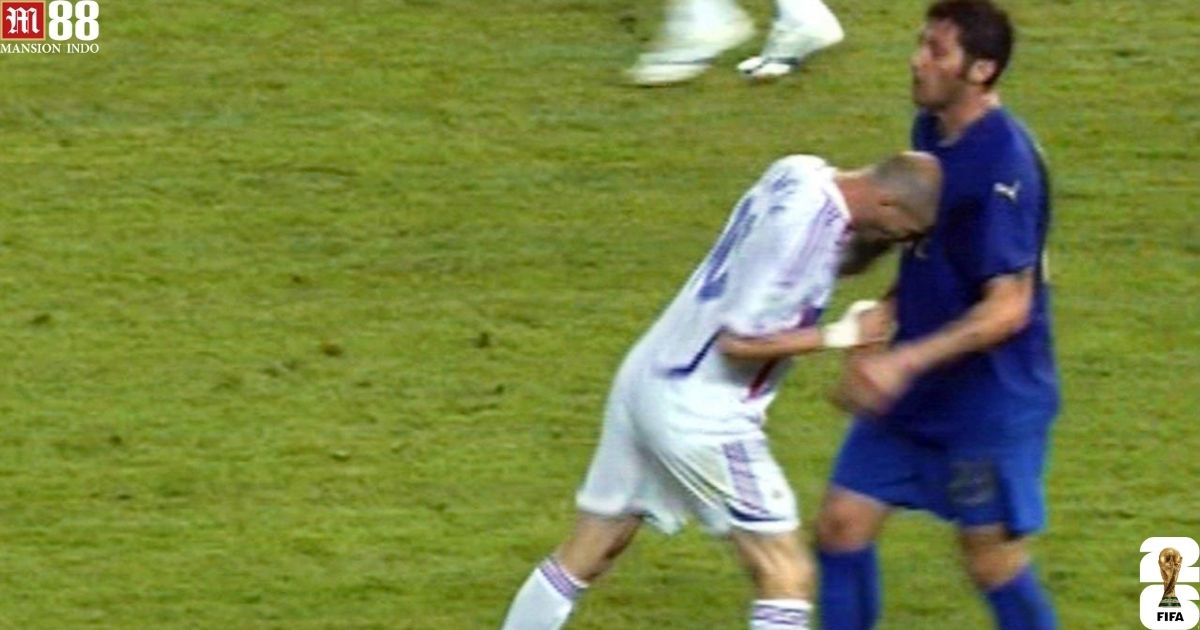
In addition to the Zidane vs Materazzi incident in the final, the 2006 World Cup also featured another rare controversy involving a unique refereeing error.
English referee Graham Poll issued three yellow cards to the same player, Josip Simunic of Croatia, during the Croatia vs Australia match.
Simunic received his first yellow card for fouling Harry Kewell in the 61st minute, a second in the 90th minute, and was only sent off after receiving a third yellow card.
This mistake became a major talking point as it highlighted poor coordination between the referee, assistants, and match officials at the World Cup.
9. 2010 World Cup
At the 2010 World Cup, England faced Germany in the Round of 16. Frank Lampard struck a long-range shot that clearly crossed the German goal line.
However, the referee did not award the goal because goal-line technology and VAR were not yet implemented. England eventually lost and were eliminated.
This controversy sparked global discussions about the need for technology in football to prevent critical errors.
10. 2014 World Cup
The 2014 World Cup controversy emerged from the very first match, when Brazil faced Croatia in the opening game.
Japanese referee Yuichi Nishimura was considered biased. He disallowed a Croatian goal and awarded a penalty to Brazil after striker Fred went down.
Croatian players complained about poor communication with the referee, even stating that he did not understand English.
Many believed that the referee’s decisions influenced the course of the match and the final result.
11. 2018 World Cup
The 2018 World Cup in Russia was also marked by political controversy. Following the Salisbury poisoning case, there was potential for a boycott, but no firm action was taken.
However, the feminist punk group Pussy Riot invaded the pitch during the France vs Croatia final as a protest against human rights violations in Russia.
The pitch invasion lasted 25 seconds, drew global attention, and added to the list of controversies proving that the World Cup is not only about sports but also a platform for global protest.
12. 2022 World Cup
The 2022 World Cup drew significant attention due to human rights and logistical issues. Many matches had limited public screenings in Europe, there were protests against the Iranian government, and the tournament schedule was moved to winter, disrupting the global football calendar.
Extreme heat, controversial new infrastructure, and local cultural challenges for an international tournament added to the controversy.
These issues demonstrated that the World Cup in Qatar was more than just football matches, but also a global debate on human rights and the ethics of hosting major sporting events.
The World Cup is indeed more than just football. From the pitch to global politics, every edition leaves behind controversial stories that endure.
From Maradona’s “Hand of God” to Lampard’s disallowed goal, all these moments prove that the World Cup remains a stage for global drama that never loses its appeal and always keeps us anticipating the next edition.
Latest Article