
5 Youngest Players in World Cup History
Curious to find out who the youngest players in World Cup history are? Let us review them below.
m88worldcups.com – The World Cup has always been the grandest stage for footballers from all over the world.
This four-yearly tournament not only showcases established and experienced star players, but also provides opportunities for young talents to prove themselves.
It is here that mental resilience is tested under the glare of magnificent stadium lights and the pressure of millions of watching eyes.
Interestingly, there are several young players who have already made history as the youngest players in the World Cup.
They broke the stigma that extensive experience is an absolute requirement to compete at the highest level.
Just imagine, while most teenagers their age were still focused on school or only beginning their careers at junior club level, these players were already wearing their nation’s colors on the most prestigious stage in world football. Their young age did not make them afraid to face global pressure.
On the contrary, it became proof that extraordinary talent can emerge at any time, even during the teenage years.
So, who are the players included in the list of the youngest players in World Cup history? Let us discuss them one by one.
List of the Youngest Players in the World Cup
1. Norman Whiteside
When it comes to records, the name Norman Whiteside cannot be overlooked. This Northern Ireland player still holds a record that is extremely difficult to break, namely as the youngest player ever to step onto a World Cup pitch.
He made his World Cup debut at the 1982 tournament in Spain at the age of just 17 years and 41 days, with some records stating 40 days.
Whiteside broke a record that had previously been held by Pele for 24 years. At that time, he was already playing for Manchester United, and the trust given to him by coach Billy Bingham at international level astonished the public.
Whiteside was not merely seated on the bench; he started the match against Yugoslavia.
Although he did not score in his debut match, his courage in dueling with senior players proved that he was a true wonderkid of his era.
2. Samuel Eto’o
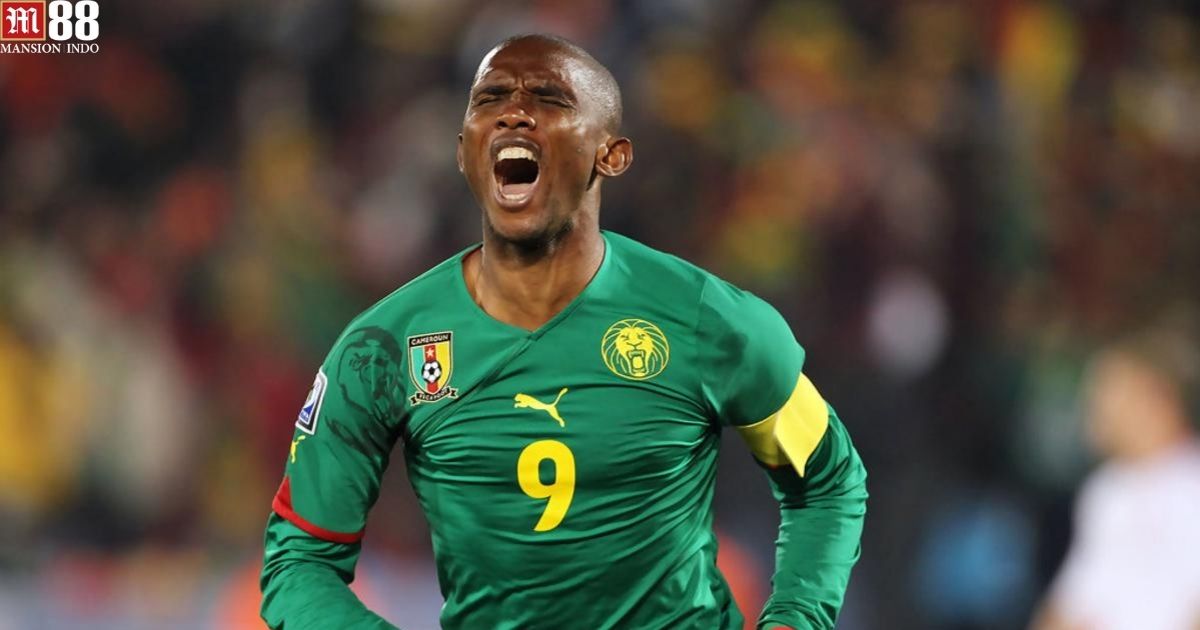
Who does not know Samuel Eto’o? The legendary Cameroonian striker was also recorded as one of the youngest players in World Cup history.
Eto’o made his debut at the 1998 World Cup in France, specifically in a group stage match against Italy. At that time, he was only 17 years and 98 days old.
Although he appeared as a substitute and Cameroon had to suffer defeat, that moment marked the beginning of a dynasty. Eto’o later evolved into one of the most feared strikers in the world.
His long journey at club level with European giants such as Barcelona and Inter Milan, where he won consecutive treble titles, ensured that his name is remembered as one of the greatest forwards of all time from Africa.
His early World Cup debut seemed to be an initial signal that the world was witnessing the rise of a future king of football.
3. Youngest World Cup Player: Femi Opabunmi
Nigeria also has a proud representative on the list of the youngest players in the World Cup. Femi Opabunmi recorded a historic debut against England at the 2002 World Cup held in South Korea and Japan. At that time, he was just 17 years and 100 days old.
Opabunmi was selected for the Super Eagles squad after delivering impressive performances at the U-17 World Championship. Although Nigeria did not progress far in the tournament due to being placed in a so-called group of death, Opabunmi attracted significant attention for his agility on the wing.
Unfortunately, Opabunmi’s career did not develop into a long and illustrious journey like Eto’o or Pele. Serious vision problems, specifically glaucoma, forced him to retire early from football.
Nevertheless, the record he set in 2002 remains eternal in history books as proof of great talent from West Africa.
4. Salomon Olembe
Cameroon indeed has a unique tradition of trusting young players to perform on the biggest stage.
In addition to Eto’o, there is also the name Salomon Olembe included in this elite list. Remarkably, he made his debut at the same tournament as Eto’o, the 1998 World Cup, in a match against Austria. At that time, he was only 17 years and 184 days old.
Olembe was known as a midfielder with exceptional speed and stamina. Although not as globally famous as Eto’o, Olembe enjoyed a solid career at European club level, particularly in the French league with Nantes and Marseille.
His presence on this list confirms that the Indomitable Lions, Cameroon’s nickname, have never hesitated to pass the baton to the younger generation in order to maintain national team regeneration.
5. Youngest World Cup Player: Pele
The final name on this list is a figure who has become synonymous with football itself: Pele. The King of Football made his World Cup debut at the 1958 tournament in Sweden when he was just 17 years and 234 days old.
Unlike the other players on this list, Pele was not merely present to gain experience, but immediately dominated the tournament. The world was left in awe by his technique and goal-scoring instincts, which were unimaginable for a teenager.
He became the youngest player to score a goal in a World Cup, the youngest player to score a hat-trick, against France, and the youngest player to score in a final, against Sweden.
Thanks to his magical contributions, Brazil successfully won their first World Cup title. The moment in 1958 was not merely a debut, but a proclamation of the birth of a legend who would change the face of football forever.
Closing: The Young Generation That Brings Hope
Looking at the list above, it is clear that the youngest players in the World Cup are not merely numbers on paper. They are symbols of courage and tangible proof that talent knows no age.
Football has always provided space for those who dare to dream big. Some only enjoyed brief moments in the spotlight before fading due to injury, but others used the opportunity as a stepping stone to become global icons.
The presence of these young players always adds new color and a different energy to every tournament.
They carry hope for their nations and emphasize that regeneration is the lifeblood of football.
We can only wait and see in future World Cup editions who the next teenage prodigy will be to shake the world.
Latest Article