
2010 World Cup Controversies
Explore the 2010 World Cup controversies: from the Jabulani ball and Lampard's disallowed goal to the internal scandal within the French national team.
2010 World Cup Controversies – m88worldcups.com – The 19th edition of the World Cup held in South Africa became one of the most memorable tournaments in the history of modern football.
In addition to the fierce competition between major powers such as Germany and Spain on the pitch, this tournament was also marked by various complex incidents that sparked heated debates among football fans around the world.
From sharp criticism of the Jabulani ball to the major turmoil involving the French national team, many compelling narratives accompanied the progress of this four-year competition.
Let us review some of the most attention-grabbing 2010 World Cup controversies that shocked the international football stage.
2010 World Cup Controversies That Caused a Stir
1. The Jabulani Ball and Criticism from Players
The official ball for the 2010 edition was named Jabulani, produced by Adidas and introduced to the public on December 4, 2009. The name comes from the Zulu language, meaning “to celebrate.”
Technically, this ball was designed with eight 3D panels and featured “Grip ‘n’ Groove” technology, which was claimed to provide maximum stability and control for players on the field.
However, in practice, the ball was heavily criticized by players, especially goalkeepers. Jabulani was considered to have highly unpredictable movement because it often floated without a clear direction when kicked.
Many goalkeepers complained about the difficulty of stopping shots, while attackers also struggled to control the accuracy of the ball.
This incident triggered waves of debate and analysis from football experts regarding the extent to which ball quality affects fairness in competition and athlete performance. Jabulani became the primary technical controversy icon of the tournament and sparked global discussion across various sports media channels.
2. 2010 World Cup Controversy: Frank Lampard's Disallowed Goal
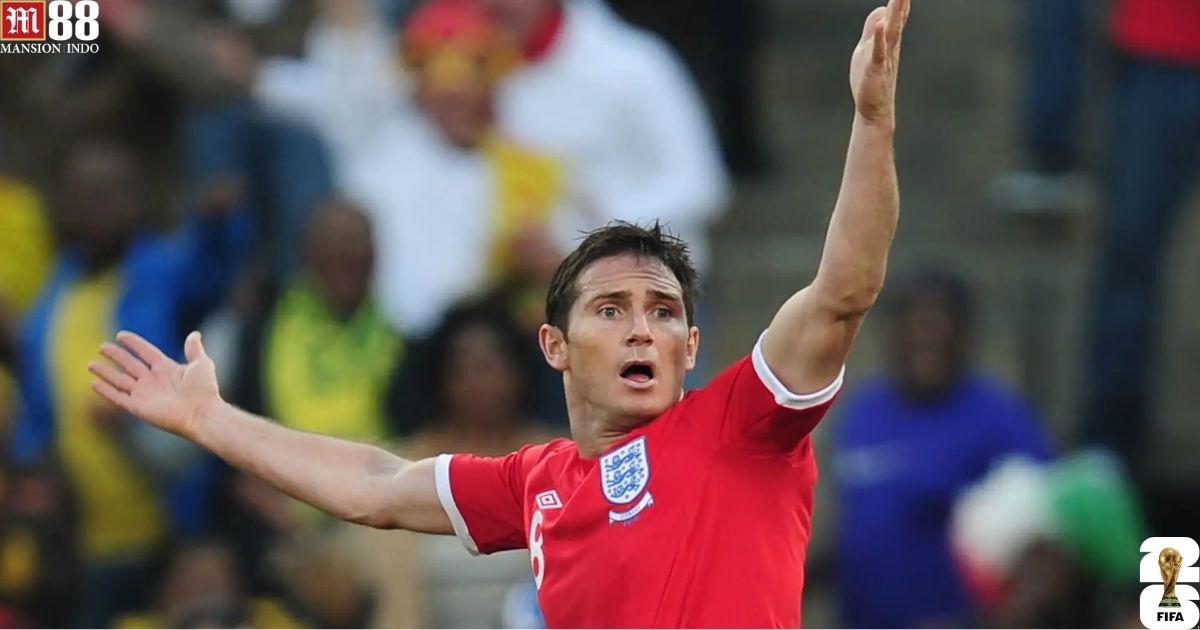
During the Round of 16 match between England and Germany, a moment occurred when Frank Lampard unleashed a long-range shot that had visibly crossed the German goal line.
However, the referee did not award the goal because goal-line technology and VAR had not yet been implemented in official matches at that time.
The decision not to recognize the legitimate goal resulted in England’s elimination and triggered widespread protests worldwide.
International media heavily covered this case as strong evidence of why football needed modern technology to avoid human errors with fatal consequences.
This incident became not only a topic of discussion among fans but also triggered in-depth discussions within FIFA regarding the use of technology to reduce the risk of human error in crucial matches.
Many observers even labeled Lampard’s moment as one of the bitterest incidents for the England national team because it was considered capable of changing their fate in the tournament.
3. Suárez Handball in the Quarter-Finals
The most dramatic moment erupted when Uruguay faced Ghana in the quarter-finals. Luis Suárez deliberately blocked the ball with his hand right on the goal line to prevent Ghana’s winning goal in the final seconds of extra time.
For this action, Suárez was immediately shown a red card, and Ghana received a penalty, which unfortunately was not converted into a goal by Asamoah Gyan.
African communities viewed Uruguay’s action as cheating, while Suárez confidently described his act as “the best save of the tournament.”
This controversy sparked long discussions regarding the boundaries of sportsmanship, ethics, and intelligent play in football.
Many experts and former players debated whether the action constituted deception or simply brilliant tactics during a critical moment.
This case also initiated global discussions about the need to review the rules of the game and the possibility of additional sanctions for actions that may be legal by regulation but are morally highly questionable.
4. French National Team Drama and Internal Scandal
The French national team squad was hit by a severe internal conflict throughout the 2010 tournament. Forward Nicolas Anelka was known to have confronted coach Raymond Domenech with harsh words after the team suffered defeat against Mexico.
As a result of the incident, Anelka was sent home, while captain Patrice Evra was involved in an argument with the coaching staff, which triggered player solidarity in the form of a one-day training boycott.
This chaos became a major topic for the public and media in France because it exposed the poor management of the national team.
At the time, French President Nicolas Sarkozy and Sports Minister Roselyne Bachelot even intervened to reprimand the players, as they were considered to have tarnished the country’s reputation and damaged the image of French football globally.
After the tournament ended, all squad members were sanctioned by the French Football Federation (FFF). Several key players such as Anelka, Evra, Ribéry, Toulalan, and Abidal received bans from representing the national team in several future matches.
This controversy demonstrated how internal friction and damaged discipline can destroy a team’s performance and the dignity of a nation.
5. 2010 World Cup Controversy: Animal Sacrifice in Stadiums
In South Africa, controversy emerged over plans for a cow slaughter ritual inside the stadium area before the start of matches. Makhonya Royal Trust claimed that the ritual was part of local tradition intended to bless the tournament.
This traditional ceremony was ultimately carried out at Soccer City Stadium, Johannesburg, including animal slaughter as well as cultural ceremonies such as dancing, singing, and prayers led by tribal elders.
Although considered part of preserving host nation culture, the act drew strong protests from international animal protection organizations and sparked debate over the intersection of local wisdom and universal ethical standards.
This incident demonstrated how traditional values can sometimes clash with modern perspectives regarding animal rights while simultaneously drawing global attention to the sociocultural side of the host nation.
Conclusion
The 2010 World Cup proved to be more than just about scoring goals and lifting trophies, but also a stage for various dramas both on and off the pitch.
The issues surrounding the Jabulani ball, Lampard’s disallowed goal, Suárez’s handball, the French team’s internal conflict, and the cow slaughter ritual showed that this tournament was full of narratives that were not only entertaining but also stimulated serious discussion.
These various controversies will continue to be important records in world football history, reminding all of us that this sport is not only about technical skill and strategy, but also involves emotions, cultural backgrounds, and ethical values that always create lasting stories for fans across the globe.
Latest Article