
11 Interesting Facts About the 2010 FIFA World Cup
Take a look at various Interesting Facts About the 2010 FIFA World Cup! From the deafening sound of vuvuzelas to Spain’s historic tiki-taka dominance in Africa.
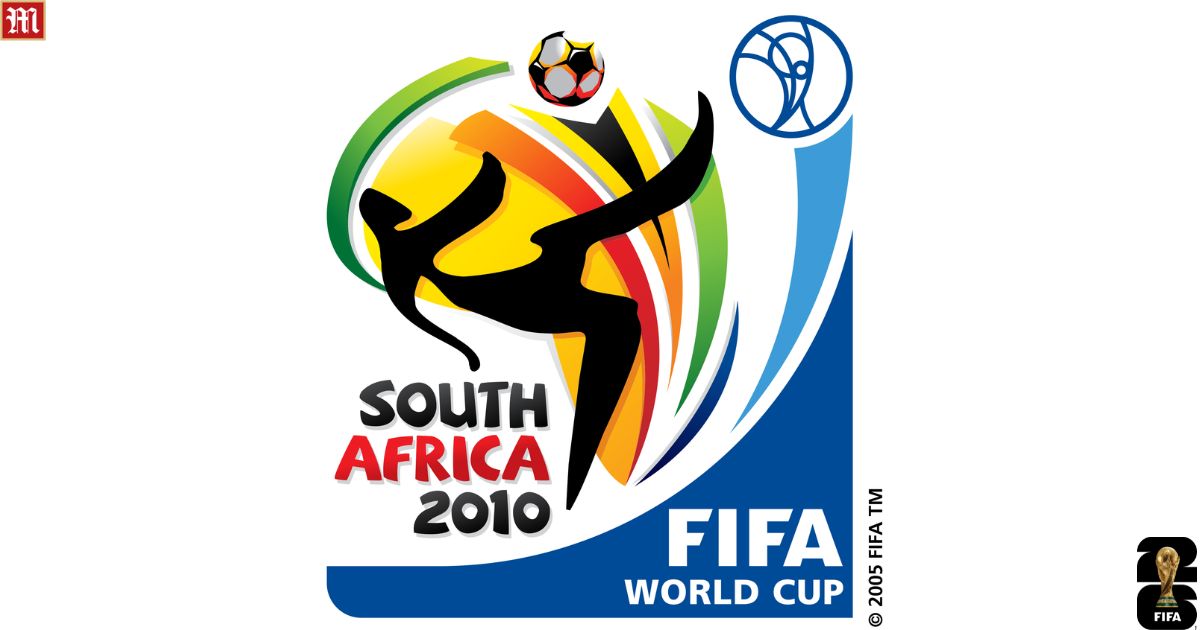
Interesting Facts About the 2010 FIFA World Cup – m88worldcups.com – The 2010 FIFA World Cup in South Africa was not only a stage for competing for the most prestigious trophy in football, but it also delivered many fascinating stories that are still frequently discussed today.
This tournament felt truly iconic, from the sound of vuvuzelas echoing throughout the stadiums, Spain’s tiki-taka style dominating matches, to the fiery final between the Netherlands and Spain filled with drama.
In addition to marking the first-ever World Cup title for La Furia Roja, the 2010 FIFA World Cup also produced many remarkable facts that made this tournament stand out from previous editions.
This time, we will review a series of unique facts about the 2010 FIFA World Cup that made the tournament in South Africa so memorable.
Interesting Facts About the 2010 FIFA World Cup
1. The First World Cup Held in Africa
One of the greatest achievements of the 2010 FIFA World Cup was the fact that the tournament was held on the African continent for the very first time.
South Africa was selected as the host nation and received the great honor of organizing the biggest football celebration in the world.
This decision by FIFA was viewed as a crucial step in expanding the reach of the football industry across the globe.
Unfortunately, despite enjoying full support from their home crowd, the South African national team was unable to produce a major surprise on the pitch.
They failed to advance from the group stage, and this disappointing record made South Africa the first host nation in World Cup history to be eliminated during the group stage.
Even so, the atmosphere they created, the passion of their supporters, and the strong presence of African culture ensured that this tournament retained a special place in the hearts of football fans.
2. The Echoing Vuvuzelas
When discussing the 2010 FIFA World Cup, public memory immediately turns to the distinctive sound of the vuvuzela, a traditional wind instrument from South Africa.
Throughout the tournament, thousands of supporters blew them simultaneously in the stands, creating a loud noise resembling the buzzing of a giant swarm of bees. The sound became so iconic that the 2010 FIFA World Cup was often referred to as the “Vuvuzela World Cup.”
However, despite its popularity, the use of vuvuzelas also generated controversy. Many players, coaches, and television viewers complained that the constant noise interfered with communication on the field.
Nevertheless, FIFA continued to allow their use because they were considered an important part of South African cultural expression.
Besides the vuvuzela, the 2010 FIFA World Cup was also widely recognized for its two official songs that became global hits: “Wavin’ Flag” by K’naan and “Waka Waka (This Time for Africa)” by Shakira.
Even today, these theme songs are frequently played whenever people discuss World Cup memories.
3. Interesting Facts About the 2010 FIFA World Cup: Spain’s Tiki-Taka Dominance
Spain finally etched its name into football history by winning its first-ever World Cup title on South African soil.
This remarkable achievement was closely linked to the implementation of the tiki-taka style, a tactical approach based on quick short passes and dominant ball possession, which at the time was the defining identity of Barcelona.
Armed with the tiki-taka philosophy, Spain successfully dictated the flow of match after match. They relied on a combination of world-class players such as Xavi, Andres Iniesta, David Villa, Carles Puyol, and Iker Casillas.
This playing style was not only considered effective but also aesthetically pleasing, although some critics found it boring because Spain often secured narrow victories.
Their success in the final against the Netherlands through Andres Iniesta’s legendary goal in the 116th minute crowned Spain as the eighth nation to lift the World Cup trophy.
Furthermore, they became the only team to win the UEFA European Championship (2008), the FIFA World Cup (2010), and then the UEFA European Championship again (2012) consecutively.
4. The Champion with the Fewest Goals
One of the most interesting aspects of the 2010 FIFA World Cup was the goal-scoring record of the champions. Spain scored only 8 goals in 7 matches, making them the World Cup champion with the fewest goals in tournament history.
From the Round of 16 through to the final, Spain won every knockout match by the identical scoreline of 1-0. Even so, their performance was still regarded as outstanding because it demonstrated that victory is not solely about scoring many goals, but also about consistency, discipline, and tactical efficiency.
5. Record Number of Yellow Cards in a Final
The final between Spain and the Netherlands at Soccer City in Johannesburg is remembered not only because of Andres Iniesta’s winning goal, but also because of the intensity of the match.
Referee Howard Webb was forced to issue 14 yellow cards and 1 red card, making it the World Cup final with the highest number of disciplinary cards in history.
One of the most iconic moments that remains unforgettable occurred when Dutch defensive midfielder Nigel de Jong delivered a kung-fu-style challenge directly into Xabi Alonso’s chest.
Many observers believed De Jong should have received a straight red card, but Webb only showed him a yellow card.
The Netherlands’ physical style of play attracted significant criticism, including from their own legendary figure Johan Cruyff, who described the Oranje’s approach as “anti-football.”
6. Interesting Facts About the 2010 FIFA World Cup: The Netherlands’ Third Final
For the Netherlands, the 2010 final represented their third opportunity to win the World Cup trophy.
Unfortunately, just like their previous opportunities in 1974 (defeat to West Germany) and 1978 (loss to Argentina), they once again suffered heartbreak.
The narrow 1-0 defeat to Spain further reinforced the perception of the Netherlands as a team that is “great but unlucky.” To this day, they remain one of the most successful nations internationally without ever winning a World Cup title.
7. The Defending Champion Curse
The 2010 FIFA World Cup also continued the infamous tradition known as the defending champion curse. Italy, the reigning champions from the 2006 World Cup, suffered an embarrassing group-stage elimination after failing to win a single match. They managed only draws against Paraguay and New Zealand before being defeated by Slovakia.
Italy’s poor performance further strengthened the belief that defending a World Cup title is an extremely difficult task.
This defeat extended the list of defending champions eliminated early, a fate that had previously affected Brazil (1966) and France (2002).
8. The Second Final to Go to Extra Time
The 2010 FIFA World Cup final became the second final in history to require extra time after a 0-0 scoreline remained intact throughout the regulation 90 minutes.
The first final to experience a similar scenario occurred in the 1994 FIFA World Cup between Brazil and Italy, although that match was ultimately decided by a penalty shootout.
However, in South Africa, Spain eventually broke the deadlock and scored the winning goal through Iniesta in the 116th minute, meaning a penalty shootout was not required. That goal is now remembered as one of the most emotional moments in World Cup history.
9. Interesting Facts About the 2010 FIFA World Cup: Four Top Scorers
Usually, there is only one Golden Boot winner at the World Cup, but the 2010 edition produced something unique. Four different players finished with 5 goals each: David Villa (Spain), Thomas Müller (Germany), Wesley Sneijder (Netherlands), and Diego Forlán (Uruguay).
Müller was officially awarded the Golden Boot because he recorded more assists than the other contenders.
Meanwhile, Diego Forlán won the Golden Ball award as the tournament’s best player thanks to his outstanding performances for Uruguay.
10. The First Final Between Two Nations Without a World Cup Title
The 2010 FIFA World Cup final was recorded as the sixth final featuring two national teams that had never previously won the World Cup.
For the Netherlands, the 2010 final was their third World Cup final appearance.
Their first final came in 1974 in Germany, where they were defeated 2-1 by host nation West Germany, led by legendary figures such as Franz Beckenbauer and Gerd Muller.
At the next edition in 1978 in Argentina, the Netherlands once again reached the final, only to suffer a similar disappointment.
The Dutch were defeated 3-1 by host nation Argentina, led by Mario Kempes and his teammates.
For Spain, who became the champions of the 2010 FIFA World Cup, the 2010 final was their first World Cup final appearance. Their previous best achievements had only been quarter-final appearances in 2002, 1994, and 1986.
Spain ultimately emerged as the new world champions, while the Netherlands once again had to settle for runner-up status.
This final became one of the most historically significant matches because it produced a new World Cup champion for the first time since France in 1998.
11. Portugal vs North Korea: The Biggest Scoreline
The match with the largest winning margin during the 2010 FIFA World Cup occurred when Portugal overwhelmed North Korea with a ruthless 7-0 victory during the group stage.
This emphatic win became one of the most notable results of the tournament and secured Portugal’s place among teams with the largest victories in World Cup history.
Superstar Cristiano Ronaldo also scored in the match, although much of the discussion surrounding his performance focused more on his unusual celebration than on his actual display on the field.
That concludes the long list of unique facts about the 2010 FIFA World Cup, proving that this tournament was truly filled with memorable moments.
From the deafening sound of the vuvuzela that temporarily overwhelmed stadiums, to Spain’s highly effective tiki-taka philosophy despite their low goal tally, and the dramatic final filled with intense battles between Spain and the Netherlands, everything combined to make the 2010 FIFA World Cup one of the most unforgettable editions in history.
The tournament also successfully opened a new chapter in world football by producing a new champion, Spain, while demonstrating how the World Cup can serve as a platform to celebrate culture, technology, and human emotion.
If asked which World Cup edition was the most iconic, many people would undoubtedly mention South Africa 2010.
Because it was there that we learned not only about the meaning of victory, but also about how football can unite the world in a global celebration filled with stories.
Latest Article