What Is a Supporter Capo? Here Is the Answer
A supporter capo is the central figure who leads chants in the stands. Learn the meaning, the history of ultras from Italy, and their crucial role.
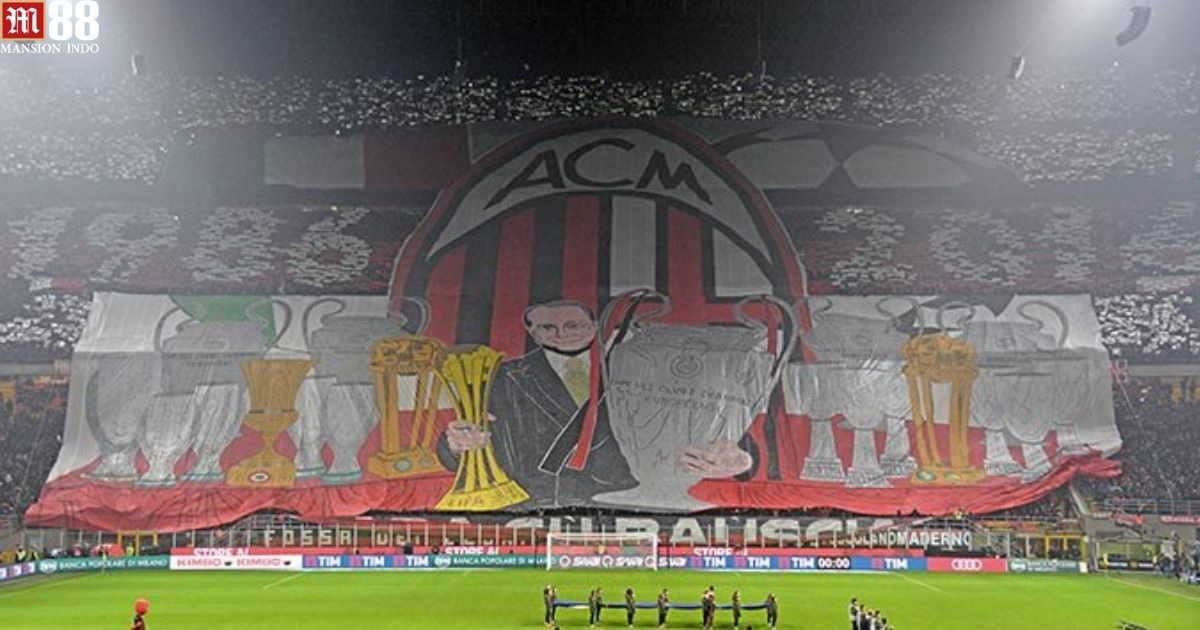
m88worldcups.com – Supporter Capo – In the world of football, the atmosphere in the stadium is often an inseparable part of the course of a match.
Thousands of supporters sing, jump, and wave various attributes to provide support for their beloved team.
Behind that excitement, there is one important figure who usually stands at the front of the stands and leads the course of that support. That figure is known as the capo.
Many people ask, what exactly is a Supporter Capo and why is the role so important among football supporters.
To understand this, we need to look at the history, the role, and how the capo figure became an important part of ultras culture in various countries.
Talking about the capo figure cannot be separated from discussing ultras. They are two elements that are related to each other.
Ultras, in their development as one of the supporter groups, have quite a long history.
Indeed, this history also has many inconsistencies, because supporter groups in various countries in the past often identified themselves as ultras. Ultras itself etymologically means something extraordinary and beyond the usual.
However, if examined, the history of ultras actually originated from Brazil in 1939.
At that time, in the Land of Samba there was a supporter group called torcida organizada.
At the 1950 World Cup, torcida showed itself to the world through attractive choreographies.
Supporters of Hajduk Split were inspired by that, and eventually formed Torcida Split in October 1950.
Torcida Split became the oldest ultras group in Europe, as well as the forerunner of the birth of other ultras in Europe. When entering Italy, these ultras presented another figure and atmosphere.
In addition to bringing a very strong political nuance, with a left-wing aroma that often decorated the basis of the movements and political attitudes they adopted, ultras in Italy also introduced a new term: capo, or also commonly called capo tifoso.
Then, who and what is capo tifoso or capo?
History of Capo / Capo Tifoso
Linguistically, if interpreted, capo tifoso or capo indeed comes from Italian. It means “leader of the supporter group”.
The awarding of the title capo tifoso also cannot be arbitrary. Eddward S. Kennedy in his book titled Sepak Bola Seribu Tafsir mentions that the title capo tifoso was given to someone who succeeded in killing a police officer when a group of ultras clashed with the police.
Furthermore, several literatures mention that a capo is a figure who leads a group of ultras in one corner of the stadium.
Commonly, ultras will occupy the curva, the curved part of the stadium located in the north or south stand.
Therefore, the names of ultras often relate to the names of the north and south stands, such as Curva Nord or Curva Sud (specifically in Italy).
In the middle of that curved curva the capo stands. He gives commands to the ultras, creates choreography, and shouts voices of support for the players in the stadium.
However, not infrequently the ultras, in accordance with their name, do something excessive in the stadium, such as lighting flares and fireworks, or even provoking disturbances.
Behind all the entertaining yet excessive actions of ultras in the stadium, there is the figure of the capo who becomes the leader.
In a writing written by Tobias Jones on The Guardian website titled Beyond the Violence, The Shocking Power the Ultras Wield Over Italian Football, the capo figure is described as a charismatic figure and one who has great influence.
However, the capo figure is not only charismatic and influential. The capo figure must also be able to unite various opinions from other ultras, gather them, and then turn them into a collective voice from the ultras group he leads.
Therefore, it is not uncommon for ultras to hold meetings, similar to political meetings, to make decisions regarding various matters.
In essence, according to Tobias, ultras are different from hooligans who are often seen like drunken youths. Ultras are more organized, more orderly, fiercer, and certainly braver.
Behind the fierceness and success of the ultras group, there is the capo or capo tifoso who becomes its leader.
Often people see someone standing in front of the supporter stands, shouting to arrange chants, yet making thousands of people sing in unison.
That figure is known as the supporter capo, the person who becomes the main driver behind the roar of support in the stadium.
The world of capo is indeed interesting to discuss, because behind every magnificent choreography, echoing chant, and heated atmosphere in the stadium, there is their role which is rarely seen but very important.
From Brazil, Italy, to France, every capo has their own story that makes the ultras world even more colorful.
Definition and History of Capo in Football
Capo comes from Italian which means “supporter leader”. However, this title cannot be given to just anyone.
In the supporter world, especially among ultras who have a high level of fanaticism, the capo is considered a central figure who has great authority and is highly respected by its members.
Usually, the capo stands in the middle of the curva, namely the north or south stand of the stadium which becomes the center of fanatical supporters.
From that position he leads chants, organizes choreography, and maintains the spirit of thousands of people present in the stadium.
A capo must also be able to unite many different opinions, because decisions within ultras groups are usually discussed together through meetings that resemble political discussion forums.
If traced further back, the origin of the ultras movement began in Brazil in 1939 through the torcida organizada group.
They began to become widely known during the 1950 World Cup because of their lively support and very attractive choreography.
From there emerged a figure who could be considered the forerunner of supporter leaders such as the capo. In practice, a supporter capo is a leader who regulates the rhythm of support and maintains the spirit in the stands so that it remains alive throughout the match.
This style of support then spread to Europe, starting from Torcida Split in Croatia in 1950 which became the first ultras group in that region.
When this culture developed in Italy, the ultras movement became stronger with the addition of political elements, until finally the term now widely known as capo tifoso was born.
The Main Roles of a Capo in Football
1. Leader of the Supporter Group
The capo can be likened to a commander in the stands. He leads the ultras, namely fanatical supporter groups that usually have a very strong bond with one another. Usually, the capo stands in the curva which becomes the center of supporter support.
From there he directs support, gives instructions to members, and becomes a respected figure, not only in the stadium but also outside the match environment.
2. Organizer of Spirit and Chants
When the match takes place intensely, the capo plays a role in regulating the rhythm of chants so that all supporters remain united.
He must be sensitive to the atmosphere of the match, knowing when to create euphoria when the team is leading, when to raise morale when the team is behind, and even when the right time is to pressure the opponent’s mentality through chants.
Sometimes they also have certain strategies to influence the stadium atmosphere, such as singing chants with satirical tones, regulating the tempo of support, and preparing choreography that makes the atmosphere even more heated.
3. Coordinator of Tifo Choreography
Every magnificent choreography seen in the stands usually will not run without the role of a capo.
He is the one who composes the idea, organizes the formation of the supporters, and ensures all movements run harmoniously with the chants of support.
In other words, the capo can be considered like a director behind the scenes who makes the appearance of the stands look spectacular and able to give psychological pressure to the opposing team.
4. Spokesperson and Representative
Besides leading support in the stands, the capo also often becomes the spokesperson for the supporter group he leads.
He communicates with the club, security authorities, or other supporter groups if there are important matters that need to be discussed.
Therefore, the role of the capo is not merely leading chants, but also becoming a representative who conveys the aspirations of members of the supporter group.
5. Inspiration and Motivator
The capo has energy that is very easily transmitted to other supporters. The way he gives signals, leads songs, and shows enthusiasm in the stands often makes people around him get carried away by the atmosphere.
His presence also often becomes additional motivation for players on the field to continue performing optimally because they feel great support from the stands.
List of the Most Famous Capos in the World
1. Ultras Marseille
In France, Marseille ultras such as Commando Ultra '84 and South Winners 1987 have become major icons.
They make the Vélodrome Stadium always have a heated atmosphere whenever Marseille plays.
Two capo figures most known from this group are Patrice De Peretti who is known by the nickname Depé and Rachid Zeroual.
Depé is known as a charismatic figure who was highly respected by supporters. When he died in 2000, many fans still remembered him through the slogan “Depé, per sempre il primo”.
Meanwhile, Zeroual is the president of South Winners who often debates with the club management. However from there it can be seen how a capo tries to maintain the spirit and voice of the fans so that they continue to be heard.
2. Torcida Split
In Croatia there is Torcida Split, the supporter group of Hajduk Split which is often referred to as the oldest ultras group in Europe because it was founded in 1950.
Unlike many other ultras groups, Torcida Split does not have one permanent capo. They use a collective leadership system run by several core members in the north stand of Poljud Stadium.
This group is famous for their fanatical actions and their role during the Croatian independence struggle. Although they do not have a single famous capo individually, the name Torcida Split itself has become legendary in the ultras world.
3. “Il Capo” (Gennaro De Tommaso)
One of the figures most often mentioned when discussing legendary capos is Gennaro De Tommaso.
He is better known by the nickname Genny 'a Carogna or Genny the Carcass and is the leader of the Napoli ultras.
His name began to become widely known during the Coppa Italia final in 2014 when he negotiated directly with the Napoli captain on the side of the field after an incident occurred before the match began.
That event made many people realize how great the influence of a capo is, especially in major Italian clubs that have very fanatical ultras bases.
4. “Barone” (Fabrizio Piscitelli)
When discussing Lazio, the name Fabrizio Piscitelli or known by the nickname Barone is almost always mentioned. He was the leader of the Irriducibili Lazio ultras group which is known to be very solid and extreme.
Under his leadership, the group became one of the most influential ultras groups in Italy. Although known for his strong political views, Barone remained respected in the ultras world.
After he died in 2019 in a murder case, his name was remembered even more by hardcore supporters, not only in Italy but also in the international ultras community.
5. “Er Tavoletta” (Daniele De Santis)
The last figure is Daniele De Santis who is known by the nickname Er Tavoletta from the Roma ultras circle.
However, his name is more widely known because of tragedy compared to his leadership in the stands.
In 2014, he was involved in a shooting incident that caused a Napoli supporter named Ciro Esposito to die before the Coppa Italia final.
Because of that incident, the name Er Tavoletta is more widely known because of the tragic case compared to his influence in the ultras world.
In the end, a supporter capo is a figure who becomes the main driver behind the spirit and unity of the stadium stands.
He leads chants, organizes choreography, and unites thousands of voices so that support for the team remains alive throughout the match.
Without the presence of a capo, the atmosphere of the stadium might not feel as strong and as intense as it is now. Their presence shows that football is not merely a match on the field, but also about togetherness, loyalty, and identity possessed by its supporters.
Seeing the magnitude of that influence, it is not excessive to say that the stadium stands would feel different without the capo figure leading the support from the supporter ranks.
Latest Article