
6 Controversies of the 2018 World Cup
Explore the controversies of the 2018 World Cup in Russia: from VAR technology and political celebrations to Pussy Riot protests.
2018 World Cup Controversies – m88worldcups.com – The 2018 World Cup has indeed concluded, but many are still unaware of how this 21st edition became one of the most controversial World Cups in football history.
In addition to showcasing spectacular goals from world football maestros, the 2018 World Cup also presented numerous dramas and controversies that colored the tournament.
From questionable referee decisions and controversial player celebrations to political protests that captured global attention.
Beyond being the biggest sporting event in the world, the 2018 World Cup also became a reflection of how football intersects with political, social, and cultural issues. Below is a summary of the 2018 World Cup controversies that stirred public attention.
2018 World Cup Controversies That Caused a Stir
1. VAR and Debated Referee Decisions
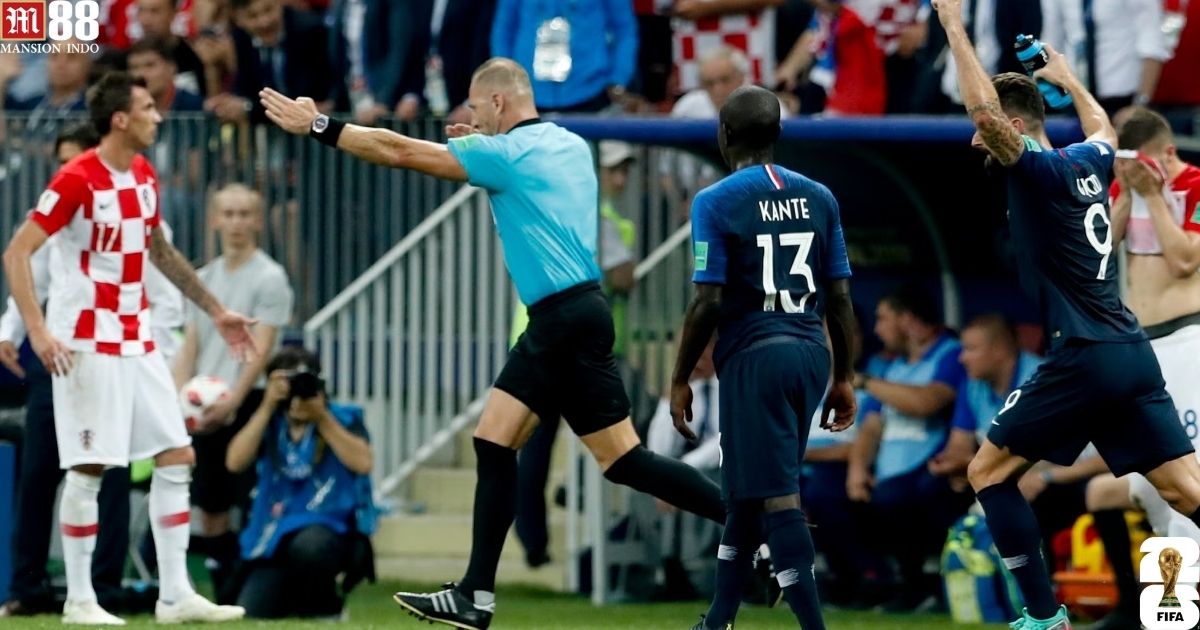
The 2018 World Cup marked the first time the video assistant referee (VAR) technology was implemented.
FIFA itself considered the use of VAR during the tournament a success, particularly for factual decisions such as offside and player identity, but in reality, many controversies still emerged.
Several VAR-based decisions were considered inconsistent. For example, in the match between Portugal and Iran, Iran was awarded a penalty after Cedric Soares committed a handball in the penalty box.
However, during the Nigeria vs Argentina match, Marcos Rojo’s handball was not awarded a penalty despite a VAR review.
Another case occurred during the final between France and Croatia, where Antoine Griezmann was fouled even though some analysts believed he had fallen before contact occurred, which later resulted in an own goal by Mario Mandžukić.
Additional criticism arose as VAR was perceived to favor bigger teams, while many subjective decisions such as penalties or disciplinary actions remained controversial.
Some fans even believed that VAR decisions lacked transparency, as both teams were not informed about which incidents were being reviewed.
2. 2018 World Cup Controversy: Switzerland and Political Celebration Against Serbia
Xherdan Shaqiri and Granit Xhaka drew global attention when Switzerland defeated Serbia 2-1. Both players celebrated their goals with the double-headed eagle gesture, associated with Albanian nationalism, as they are of Kosovar Albanian descent.
For those unaware, Serbia and Albania have previously been involved in conflict, resulting in significant casualties on both sides.
This gesture provoked anger from several Serbian media outlets, which viewed it as a political symbol that should be separated from sports and football.
As punishment, FIFA fined both players 10,000 Swiss francs each, while some Albanian supporters showed solidarity by raising funds to pay the fines.
This incident sparked debate about the boundary between identity expression and FIFA disciplinary rules, illustrating how football can bring sensitive political symbols to the forefront.
3. Pussy Riot Protest During the France vs Croatia Final
The next controversy of the 2018 World Cup involved a protest carried out by four members of the Russian feminist punk group Pussy Riot.
The group stormed the pitch for 25 seconds during the final between France and Croatia as a protest against human rights violations.
They demanded that Russian President Vladimir Putin release political prisoners and end unlawful arrests carried out during demonstrations.
As a result, the four individuals were sentenced to 15 days in prison and banned from attending any sporting events for three years.
4. 2018 World Cup Controversy: Alleged Corruption in Russia’s Host Selection
Even before the tournament began, controversy had already surrounded the 2018 World Cup. One of the main issues was the selection of Russia as the host nation.
This controversy had emerged since the Garcia Report in 2014, which cleared Russia and Qatar of corruption allegations in the bidding process for the 2018 and 2022 World Cups.
However, several parties such as the English Football Association and DFL President Reinhard Rauball considered the report lacking transparency and called for further investigation.
Some FIFA officials themselves stated that if it were proven that Russia and Qatar were selected through vote-buying, the hosting rights could be revoked.
This issue remained one of the largest controversies overshadowing the tournament from the beginning.
5. Croatia’s Celebration Toward Russia and Political Controversy
Once again, political controversy arose, this time during Croatia’s victory over Russia in the quarterfinals.
Croatian player Domagoj Vida and assistant coach Ognjen Vukojević celebrated the win with the slogan “Glory to Ukraine!”, adopted from Ukrainian nationalist groups.
In addition, Vida also reportedly said “Belgrade is on fire!”, which sparked controversy as it was interpreted as a reference to Serbia.
FIFA sanctioned Vida with an official warning, while Vukojević was fined 15,000 Swiss francs and removed from the coaching staff.
This incident demonstrated how player celebrations can trigger international political debate and varied interpretations across media outlets.
6. 2018 World Cup Controversy: Mexican Fans and Homophobic Chants
During the group stage match between Germany and Mexico, Mexican fans directed the chant “puto” at German goalkeeper Manuel Neuer, a homophobic term considered offensive.
FIFA fined the Mexican Football Federation 10,000 Swiss francs, as this was not their first violation of anti-discrimination rules.
Mexico striker Javier Hernández even urged fans via Instagram to stop using the term.
This case highlighted how aggressive fan culture can become an international controversy and impact the image of the tournament.
Conclusion
The 2018 World Cup was not only about football but also about politics, technology, and culture intersecting.
From controversial VAR decisions, politically charged celebrations, Pussy Riot protests, alleged corruption in host selection, to homophobic chants from fans, all contributed to the dramatic narrative of the tournament.
These controversies serve as a reminder that football is always more than just goals and victories; it is also a reflection of global social and political realities.
Nevertheless, the tournament still delivered memorable moments, and its controversial stories will always remain part of World Cup history.
Latest Article