
2022 World Cup Controversies
Explore various 2022 World Cup controversies in Qatar, ranging from human rights issues, alcohol bans, to artist boycotts that caused widespread debate.
2022 World Cup Controversies – m88worldcups.com – The 2022 World Cup marked a new chapter in history as it was held for the first time in the Middle East, specifically in Qatar.
This moment was welcomed with great enthusiasm by football fans around the world, yet it cannot be denied that the four-year tournament also sparked numerous heated debates.
These controversies were not only triggered by the unique regulations implemented by Qatar as the host, but also stemmed from policies by FIFA as the highest football authority, which played a major role in the tournament’s execution.
Several topics even led to global arguments, ranging from human rights issues, limits on freedom of expression, to concerns about transparency in the organization process.
The following is an in-depth review of the 2022 World Cup controversies worth examining.
2022 World Cup Controversies That Caused a Stir
1. Boycotted by Global Celebrities
The presence of various human rights issues led several top international artists to quietly withdraw their involvement.
Shakira, for example, was initially scheduled to perform at the opening ceremony but chose to step down at the last moment.
According to reports from El Programa de Ana Rosa, the specific reasons behind this decision were not explicitly disclosed, but were strongly suspected to be closely related to sensitive issues surrounding Qatar.
In fact, Shakira had an impressive track record of performing at three previous World Cup opening ceremonies, namely in the 2006, 2010, and 2014 editions.
Her withdrawal became a rare phenomenon where social and political issues influenced the participation of international musicians in a major sporting event.
2. 2022 World Cup Controversy: Alleged Manipulation of Attendance Figures
Many parties accused FIFA and Qatari organizers of deliberately manipulating stadium attendance data.
A clear example was seen in the opening match between Qatar and Ecuador at Al-Bayt Stadium, where the stadium capacity was said to be 60,000, yet FIFA claimed an official attendance of 67,372.
In reality, many images and video recordings showed visibly empty seats.
Shortly afterward, the stadium capacity data was suddenly revised to 68,895. A similar incident occurred at Khalifa International Stadium, when FIFA reported 45,334 spectators in the match between England and Iran, even though its actual capacity was only 40,000.
After further verification, the figure was revised again to 45,857. This inconsistency raised significant questions regarding the authenticity of the data published by FIFA.
3. Ban on Beer Sales in Stadiums
Just two days before the tournament kickoff on November 20, 2022, FIFA issued a sudden announcement banning the sale of alcoholic beverages within all stadium areas.
This decision followed intense discussions with the Qatari government, which strictly enforces regulations regarding alcohol consumption in public spaces.
Previously, Budweiser as a main sponsor had exclusive rights to sell beer within stadium premises three hours before matches and one hour after the final whistle.
However, this rule was completely changed, and Budweiser was only allowed to sell its products at the FIFA Fan Fest area located in central Doha and at several designated entertainment zones.
This policy triggered strong protests from supporters attending the matches. Ecuador fans were even heard chanting “We want beer” while watching their team play against the host nation.
This situation highlighted a clash between local regulations and the habits of international supporters.
4. 2022 World Cup Controversy: Paid Fan Allegations
In addition to data manipulation concerns, Qatar also faced rumors regarding the use of paid fans to provide positive testimonials about the 2022 World Cup.
Several international media outlets such as DW from Germany and NOS from the Netherlands reported that some foreign fans received travel benefits, including flight tickets and hotel accommodations, in exchange for maintaining a positive image of the tournament online.
The Supreme Committee (SC), responsible for organizing the event, acknowledged the existence of such programs.
This immediately sparked debates about the integrity and authenticity of the fan experience at what is supposed to be a purely sporting competition.
5. LGBT Issues
One of the most attention-grabbing topics was related to LGBT issues. In Qatar, same-sex relationships and sexual activities outside of marriage are considered illegal and can lead to criminal sanctions.
This situation raised concerns, particularly among supporters from European countries that strongly uphold such rights.
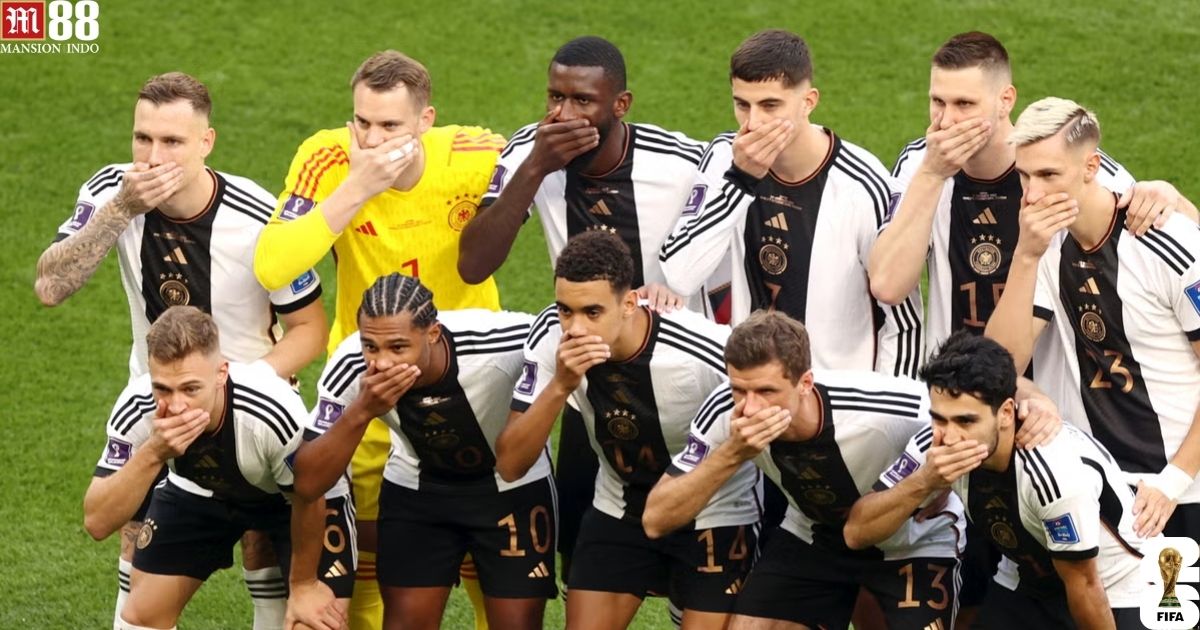
Several European national teams had planned to wear captain armbands with the “OneLove” motif as a show of support for LGBTQ rights.
However, the plan was ultimately canceled due to pressure from FIFA, which threatened sanctions if the action was carried out.
In response to this pressure, the German national team posed by covering their mouths during a pre-match photo session before facing Japan on November 24, 2022.
This silent gesture became a powerful symbol that they felt deprived of the space to express solidarity on humanitarian issues.
6. 2022 World Cup Controversy: Human Rights Violations
Various media outlets highlighted inhumane treatment experienced by thousands of migrant workers during the construction of infrastructure for the 2022 World Cup.
CNN once interviewed a worker from Nepal named Kamal, who stated that he had not received promised additional wages and had even been imprisoned without clear reason.
Kamal said: “I was not told at all why I was arrested. People were just there … some had just been shopping, some were sitting and smoking … I was simply taken without knowing what was happening.”
The Qatari government denied these reports, arguing that strict measures were only taken in emergency situations, such as acts of violence.
However, another report from The Guardian revealed a troubling fact that since Qatar was appointed as host in 2010, an estimated 6,500 migrant workers from South Asia have died, largely due to dangerous working conditions under extreme heat. This controversy raised serious ethical concerns behind the grandeur of the World Cup.
The 2022 World Cup has indeed written history as the first tournament held in the Middle East, but the accumulation of controversies surrounding it proves that the world’s biggest football festival cannot be separated from political, social, and ethical tensions.
From debates over LGBT rights, the fate of migrant workers, alcohol restrictions, the withdrawal of global stars, to allegations of manipulated attendance data, all have added a layer of drama beyond the pitch.
Despite being filled with differing opinions, the event in Qatar still delivered top-level football quality and lasting memories for audiences around the world.
These controversies also serve as an important reminder that sports will always intersect with social and political contexts, and every edition of the World Cup leaves behind narratives far deeper than just the numbers on the scoreboard.
Latest Article