
12 Stadiums of the 2018 World Cup in Russia
From the grandeur of Luzhniki to the unique design of Ekaterinburg, let's explore the 12 magnificent stadiums of the 2018 World Cup in Russia.
World Cup Stadiums 2018 – m88worldcups.com – There is always something interesting whenever we talk about the World Cup.
In addition to individual player skills or iconic spectacular goals, and the dramas that occur on the field, the grandeur of stadiums also always captivates the world’s attention.
Match venues represent a blend of culture, technological innovation, and national pride. In the 2018 edition in Russia, the world was amazed by a series of extraordinary stadiums spread across various regions.
The tournament held in Russia became a very memorable moment. As a host for the first time, Russia truly went all out in preparing the best facilities.
In total, there were 12 stadiums in 11 different cities that were used, ranging from the grandeur of Moscow to the uniqueness of Yekaterinburg.
Each venue also had its own uniqueness and character. There were stadiums with massive capacities, and others that stood out due to architectural designs inspired by local wisdom.
To refresh our memory of the 2018 World Cup, let us examine one by one the stadiums that made the tournament atmosphere in Russia so special for football fans around the world.
List of 2018 World Cup Stadiums in Russia
As discussed above, the selected venues in Russia each had their own unique narrative.
From Luzhniki Stadium, which became the silent witness of the final match, to Ekaterinburg Arena, which attracted public attention due to its unusual additional stand design to meet FIFA standards.
Without further ado, here is the complete list of the stadiums below!
1. 2018 World Cup Stadium: Luzhniki Stadium
The first stadium is Luzhniki Stadium, located in the capital of Russia, Moscow. Luzhniki is the largest stadium in Russia with a capacity of approximately 78,000 people.
This venue played a crucial role as the location for the opening match as well as the final match that featured France and Croatia.
This legendary stadium has actually stood since 1956 during the Soviet Union era. Through a complete renovation process, Luzhniki now appears modern while still maintaining its strong classic impression.
In addition, the stadium is equipped with a transparent roof and an advanced lighting system. This stadium also became a symbol of Russia’s success in hosting a world-class tournament.
2. Otkritie Arena (Spartak Stadium)
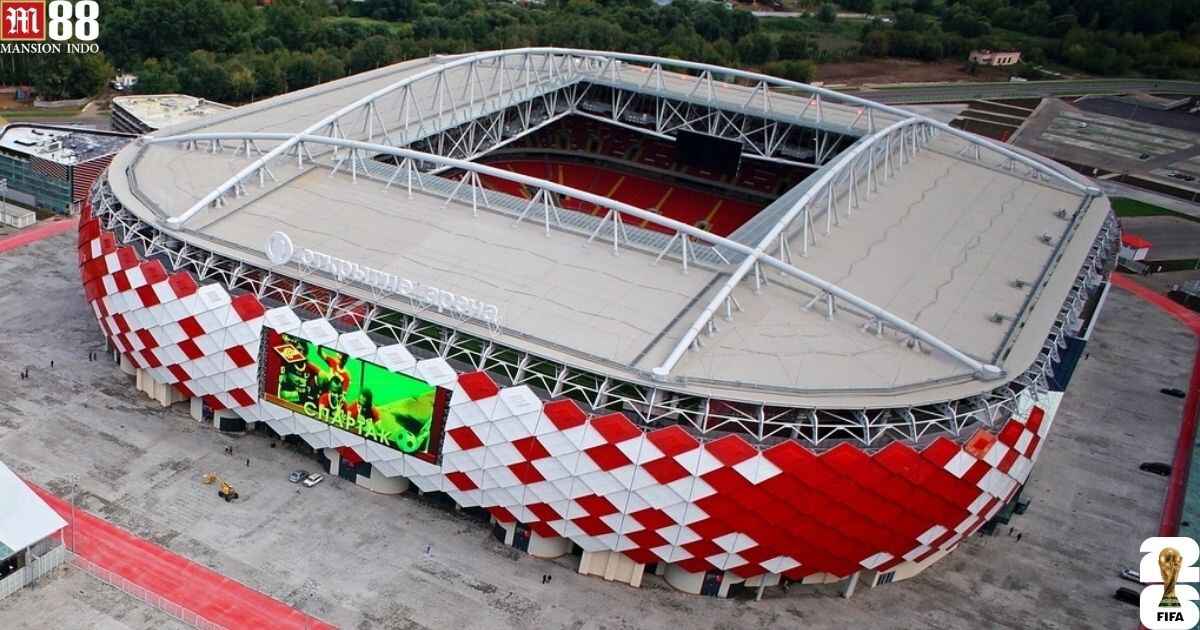
Next is Otkritie Arena, which is also located in Moscow and serves as the home ground of the popular club Spartak Moscow. This stadium, with a capacity of around 44,000 seats, was used for group stage matches up to the round of 16.
One of the features of this stadium is its facade or exterior appearance, which can change colors according to the event being held.
During the 2018 World Cup tournament, this stadium looked very luxurious with FIFA-themed decorations that brought the atmosphere to life for the supporters.
3. 2018 World Cup Stadium: Krestovsky Stadium (Saint Petersburg Stadium)
Located in Saint Petersburg, this stadium can accommodate around 64,000 spectators. Built on Krestovsky Island, its architecture looks very futuristic with a roof that can be opened and closed automatically.
Although its construction took a long time and required very high costs, the final result can be considered truly impressive and made it one of the most advanced venues in Russia.
This stadium hosted matches up to the semifinal stage and continues to be an important venue for other international events after the tournament ended.
4. Fisht Olympic Stadium
Fisht Stadium, located in Sochi, was initially prepared for the 2014 Winter Olympics. This stadium, with a capacity of 44,000 spectators, was later repurposed to host group stage matches up to the quarterfinals of the World Cup.
Its design is inspired by the snowy peaks of the Caucasus Mountains, which can be seen from the distinctive curves of its roof. Its location near the Black Sea makes Fisht one of the stadiums with the most stunning natural views in the history of the competition.
5. Volgograd Arena
Built specifically to welcome the 2018 tournament, this stadium has a capacity of approximately 43,700 spectators. Volgograd Arena stands magnificently on the banks of the Volga River, replacing an old stadium that was no longer suitable for use.
Its exterior resembles traditional weaving patterns that symbolize unity. In addition to its aesthetics, its location is also historically significant because the city was once a battlefield during World War II, giving it a distinct emotional value for visitors.
6. 2018 World Cup Stadium: Rostov Arena
Rostov Arena has a capacity of around 43,400 seats and is located on the banks of the Don River. Its roof architecture is designed in waves, imitating the flow of the surrounding river to harmonize with the environment.
This stadium became a source of pride for the local community and successfully hosted group stage and round of 16 matches. It now serves as the home ground of FC Rostov.
7. Nizhny Novgorod Stadium
This stadium stands out with its large white pillars arranged in a circular form, giving it a grand and elegant impression. With a capacity of 43,300 spectators, its design is inspired by natural elements such as wind and water that dominate the Volga region.
Its beauty becomes even more prominent at night thanks to its aesthetic blue lighting system. This stadium became one of the most praised venues for its captivating visuals during the matches.
8. Kazan Arena
Kazan Arena, located in the city of Kazan, accommodates around 42,800 spectators. Its main attraction is a giant LED screen covering the exterior of the stadium, which is claimed to be one of the largest ever installed in a sports facility.
This venue is not only used for football but also frequently hosts international-scale music concerts. It was also at this stadium where several top teams had to exit the tournament early after suffering defeats.
9. 2018 World Cup Stadium: Samara Arena
Samara Arena stands out with its massive dome that resembles a spacecraft or UFO. Due to this design, the stadium, which has a capacity of 41,900 spectators, is often referred to as the Cosmos Arena.
This concept was intentionally chosen to honor the long history of the city of Samara in Russia’s aerospace industry. The stadium witnessed intense competition up to the quarterfinal stage.
10. Mordovia Arena
This stadium, located in Saransk, has a capacity of around 41,600 spectators. Its striking orange exterior color was chosen to symbolize energy, friendliness, and the spirit of the local community.
Although Saransk is not a very large city, the presence of Mordovia Arena brought pride to local residents and continues to be used for various sporting activities after the global event concluded.
11. Kaliningrad Stadium
Kaliningrad is located in a unique region separated from mainland Russia and directly borders several European countries. This stadium, with a capacity of 34,000 spectators, offers a strong European atmosphere for visitors.
Although smaller compared to other stadiums, the atmosphere created here remained vibrant and provided a different experience for international supporters.
12. Ekaterinburg Arena
This final stadium is the most unique due to its temporary stand structure that extends outward from the main building. This was done to ensure the stadium met the minimum capacity of 33,000 spectators set by FIFA.
This unusual design became a widely discussed topic and went viral across various social media platforms. Although it appears unusual from the outside, the comfort and viewing experience from inside remained well maintained during the group stage matches.
Closing
Those are the extraordinary stadiums that became part of a major chapter in Russia’s history. Through spectacular infrastructure, Russia successfully left a deep impression on football fans.
From the grandeur of Luzhniki to the bold innovation in Ekaterinburg, each venue performed its role perfectly in creating an unforgettable sporting celebration.
These stadiums serve as clear evidence of how football can unite technology, history, and art into one beautiful harmony.
Latest Article