
10 Stadiums of the 2010 World Cup
Recall the 10 iconic stadiums of the 2010 World Cup in South Africa, from Soccer City to the unique design of Mbombela.
2010 World Cup Stadiums – m88worldcups.com – When talking about football, the 2010 World Cup in South Africa is one of the tournaments that is difficult to forget.
In addition to being the first World Cup held on the African continent, this 19th edition of the tournament also presented several moments that are truly unforgettable.
From the roar of vuvuzelas that enlivened the matches, the intriguing predictions of Paul the Octopus, to the theme song Waka-Waka that you surely still remember to this day.
To refresh our memory of the 2010 World Cup, let us take a look at the stadiums of the 2010 World Cup that are equally iconic.
List of 2010 World Cup Stadiums in South Africa
1. FNB Stadium (Soccer City)
The first is FNB Stadium, better known as Soccer City, located in Johannesburg.
This stadium is the largest in South Africa, capable of accommodating approximately 85,000 spectators.
During the 2010 World Cup, Soccer City hosted two important matches, namely the opening match and the final between Spain and the Netherlands.
The design of this stadium is inspired by the calabash, a traditional African pot, with a striking orange-brown color.
Soccer City truly became an icon of the 2010 World Cup due to its extraordinary atmosphere every time a match was held here.
2. 2010 World Cup Stadium: Ellis Park Stadium
Still in Johannesburg, there is also Ellis Park Stadium with a capacity of more than 55,000 spectators.
In addition to being used for several important matches in the 2010 World Cup, Ellis Park Stadium also has a long history, especially in rugby, but it was also used for several important matches in the 2010 World Cup.
Ellis Park is known for its intimate atmosphere because the stands feel close to the pitch. Many intense matches from the group stage to the round of 16 took place here. The presence of this stadium made Johannesburg one of the busiest cities during the tournament.
3. Cape Town Stadium
Cape Town Stadium, also known as Green Point Stadium, has a capacity of around 64,000 spectators.
Its location is very strategic, situated near the sea with the iconic Table Mountain as its backdrop. This stadium became one of the most photogenic venues throughout the tournament.
In addition to hosting group stage matches, Cape Town Stadium was also the venue for the semi-final between Uruguay and the Netherlands.
The atmosphere was truly extraordinary due to the combination of natural scenery and the cheers of the crowd.
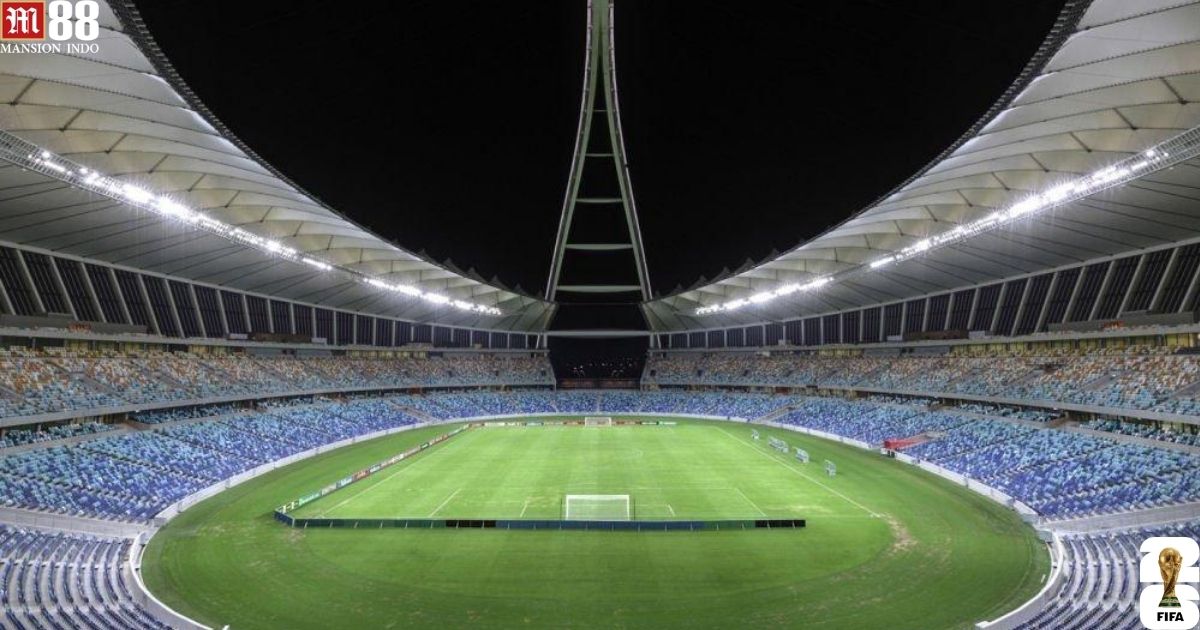
4. Moses Mabhida Stadium
Durban has a magnificent stadium called Moses Mabhida Stadium with a capacity of around 62,000 spectators.
The distinctive feature of this stadium is the large white arch at the top, making it one of the architectural icons of South Africa.
In addition to being a football venue, this stadium also has unique facilities such as a sky car that can take visitors to the top of the arch to view the panorama of the city of Durban.
During the 2010 World Cup, this stadium hosted matches from the group stage to the semi-finals, including the intense clash between Germany and Spain.
5. Loftus Versfeld Stadium
In the city of Pretoria, there is Loftus Versfeld Stadium with a capacity of more than 42,000 spectators. This stadium has existed for a long time and is usually used for rugby, but it also became one of the World Cup venues.
Although not as large as other stadiums, Loftus Versfeld has a distinctive and intimate atmosphere with the spectators. This stadium was used for group stage matches, and many fans enjoyed its classic atmosphere.
6. 2010 World Cup Stadium: Nelson Mandela Bay Stadium
This stadium was relatively new at the time, built specifically for the World Cup with a capacity of around 42,000 spectators. Its location by the lake makes it appear both beautiful and magnificent.
Nelson Mandela Bay Stadium is the pride of the city of Port Elizabeth as it became the first major stadium in the area. In addition to the World Cup, this stadium is also frequently used for concerts and other major events.
7. Royal Bafokeng Stadium
Royal Bafokeng Stadium has a capacity of around 42,000 spectators and is located in Rustenburg. This stadium is the home ground of the local team Royal Bafokeng Nation and underwent major renovations before the World Cup.
Although its location is somewhat far from major cities, this stadium remained lively during the World Cup as it hosted several interesting matches, including the dramatic encounter between England and the United States.
8. Peter Mokaba Stadium
Polokwane was also given the opportunity to host matches with its new stadium, Peter Mokaba Stadium.
It has a capacity of around 41,700 spectators, and its design is inspired by the iconic baobab tree of Africa.
This stadium became a symbol of the development of the city of Polokwane, and although it did not host as many matches as the larger venues, the atmosphere remained lively during games.
9. Mbombela Stadium
This stadium is perhaps one of the most unique among all. Mbombela Stadium in Nelspruit has a capacity of more than 40,000 spectators, with supporting pillars designed in the shape of giraffes that immediately capture attention.
This stadium was built specifically for the World Cup and became one of the architectural icons of the tournament. Its unique design makes Mbombela Stadium frequently included in lists of the most memorable stadiums in South Africa.
10. 2010 World Cup Stadium: Free State Stadium
The final stadium on this list is Free State Stadium located in Bloemfontein with a capacity of nearly 41,000 spectators.
This stadium is more commonly used for rugby, but it was also selected as one of the World Cup venues.
The most memorable moment here was when Germany defeated England 4-1 in the round of 16.
That match is remembered not only for the result, but also for the controversy of Frank Lampard’s disallowed goal, which had clearly crossed the line.
Closing
These are the stadiums of the 2010 World Cup in South Africa. From the iconic FNB Stadium to the unique Mbombela Stadium with its giraffe design, all of these stadiums brought different dimensions to the tournament.
It was not only about the matches, but also the cultural experience, architecture, and atmosphere that made the 2010 World Cup one of the most memorable in history.
If you had the opportunity to visit one of these stadiums, which one would you most want to visit?
The legendary Soccer City, Cape Town Stadium with the view of Table Mountain, or the exotic Mbombela Stadium?
Latest Article