Carlo Ancelotti and His Future as Brazil Head Coach Ahead of the 2026 World Cup
Carlo Ancelotti has the opportunity to remain in his position as head coach of the Brazil national team well beyond the 2026 World Cup
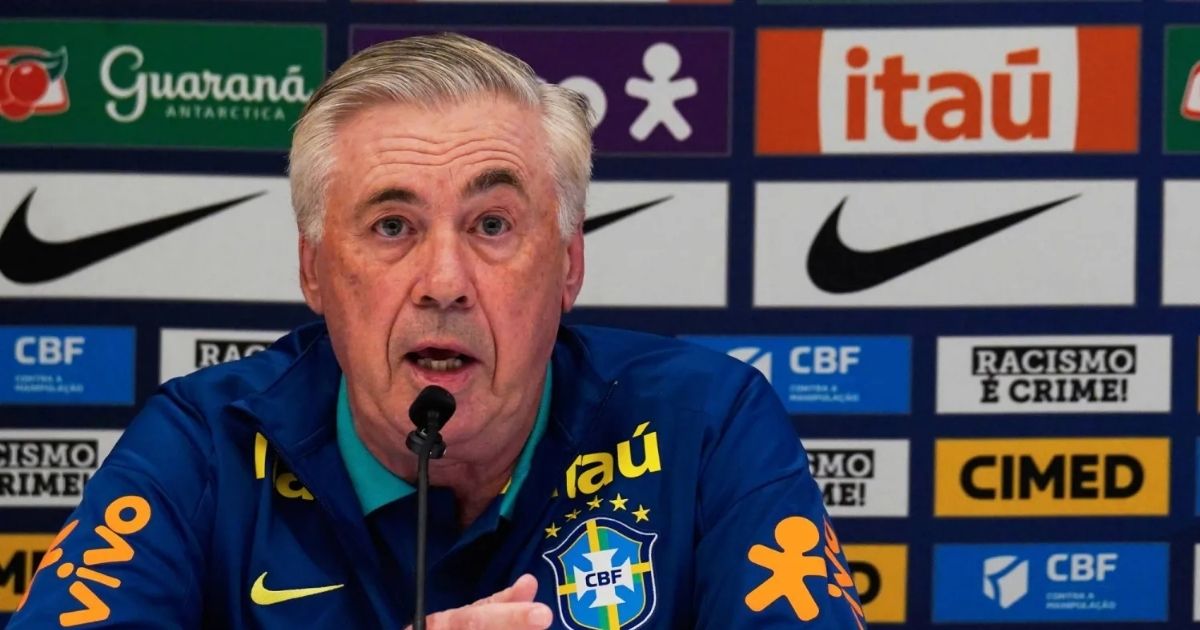
M88WorldCups - Carlo Ancelotti has the opportunity to remain in his position as head coach of the Brazil national team well beyond the 2026 World Cup, which will be held in North America.
The Brazilian Football Confederation is currently engaged in further discussions regarding a contract extension for the Italian coach.
Since being appointed as the first foreign head coach in the history of the Seleção, Ancelotti has been regarded as making a positive impression, prompting federation officials to seek continuity in pursuit of the highest achievements at the global level.
Ancelotti in Contract Extension Talks with Brazil
Brazil and Carlo Ancelotti have entered the discussion phase regarding a contract extension that would go beyond the 2026 World Cup, as reported by The Athletic.
The Brazilian federation has shown a strong desire to tie Ancelotti to a deal running until 2030, a clear signal of their intention to build a long-term project rather than limiting his role to a single major tournament cycle.
Ancelotti was appointed in May on an initial one-year contract running until the conclusion of the World Cup.
This appointment marked a historic moment in Brazil’s national team policy, as the 66-year-old became the first foreign head coach after leaving Real Madrid at the end of the 2024–25 season.
Since taking charge of the team, Ancelotti has overseen the final phase of World Cup qualification as well as several international friendly matches.
Although the results have not been entirely consistent, Brazil successfully secured qualification for the finals and maintained their record of always reaching the World Cup.
This achievement eased early pressure and further strengthened the Brazilian Football Confederation’s confidence in Ancelotti’s leadership.
CBF President Previously Addressed Ancelotti Contract Extension
The president of the Brazilian Football Confederation, Samir Xaud, had previously publicly confirmed in November that discussions regarding Ancelotti’s future were viewed positively by the federation.
When addressing the possibility of extending the coach’s tenure, he stated that such discussions were seen as a constructive step.
Xaud emphasized that the final decision would depend on alignment between both parties and highlighted the importance of stability at the national team level.
He also reminded that Ancelotti himself had stated that any decision must be beneficial for both sides. According to him, building a solid working relationship is a key factor in achieving success.
The statement was concluded with confidence that all prerequisites for establishing long-term cooperation were already in place.
This reflects the federation’s growing belief that Ancelotti is the right figure to lead Brazil not only at the upcoming World Cup, but also in the period beyond.
Ancelotti’s Early Period Marked by an Adjustment Process
Ancelotti’s appointment represented the culmination of a lengthy pursuit by the Brazilian Football Confederation, which viewed him as the ideal candidate to restore stability after a turbulent period.
He replaced Dorival Junior, who was dismissed in March after only 14 months in charge following inconsistent performances and results in World Cup qualification.
Inheriting a squad under pressure, Ancelotti was quick to calm the situation.
He led the final four qualification matches with a record of two wins, one draw, and one defeat.
Brazil finished qualification in fifth place in the South American zone, a position that was not particularly outstanding by historical standards, but sufficient to secure World Cup qualification and preserve their proud tradition.
Outside of competitive fixtures, Ancelotti used friendly matches to experiment and evaluate the available options.
Brazil recorded victories over South Korea and Senegal, while suffering a defeat to Japan and a draw against Tunisia.
This sequence of results provided a mixed picture, but was considered important for long-term planning.
Overall, the federation has chosen to prioritize structure and continuity over demands for instant perfection.
Strong World Cup Performance as the Key to Contract Extension
Attention is now focused on the possibility of Brazil and Ancelotti finalizing a contract extension through 2030.
Such an agreement would underline the Brazilian Football Confederation’s commitment to continuity and its belief that sustained success requires time rather than frequent changes in leadership.
In the near term, Ancelotti’s primary focus is preparing Brazil for the 2026 World Cup, where they are determined to end a title drought that has lasted since 2002.
Brazil were eliminated at the quarter-final stage in the last two editions, increasing the pressure on Ancelotti to deliver on the biggest stage in world football.
Brazil have already learned their opponents for the group stage of the upcoming tournament, with all group matches scheduled to take place in the United States. They will face Morocco, Haiti, and Scotland.
How Ancelotti navigates the tournament could prove decisive in determining whether discussions with the Brazilian Football Confederation become the beginning of a long tenure or instead mark the conclusion of a relatively brief period in charge of the Brazil national team.
Latest Article