
Controversies of the 2002 World Cup That Shocked the World
Read a complete review of the controversies of the 2002 World Cup, from red card drama to goals disallowed by referees.
Controversies of the 2002 World Cup That Shocked the World – m88worldcups.com – The World Cup has always been able to attract extraordinary attention from football fans across the globe.
From a series of spectacular goals created by famous players on the pitch, the drama that unfolds throughout matches, to the roaring support of fans for their beloved national teams.
The same atmosphere also colored the course of the 17th edition held in 2002. This tournament felt very special because it was held in Asia for the first time.
Japan together with South Korea were entrusted with the major responsibility as co-hosts.
In terms of atmosphere, the 2002 edition indeed presented an extraordinary impression thanks to magnificent stadiums, passionate supporters, and thrilling matches.
However, behind that excitement, there was a strong shadow of controversy. The controversies of the 2002 World Cup even became a widely discussed topic long after the tournament had ended.
Global attention was particularly focused on South Korea, the host nation that successfully reached the semifinals.
Unfortunately, their remarkable journey was accompanied by a series of refereeing decisions that sparked intense debates among fans, players, and global media.
To revisit those moments, let us examine five controversies of the 2002 World Cup that once shook the football world.
5 Controversies of the 2002 World Cup That Shocked the World
Many football observers have concluded that the 2002 edition was one of the most problematic World Cups in history.
Various refereeing decisions in several crucial matches were considered to have significantly influenced the course of the competition, and were even accused of deliberately altering outcomes to benefit certain sides.
Here is a list of heated moments that made the tournament more remembered for its drama rather than the beauty of the game.
1. 2002 World Cup Controversy: Two Portugal Players Sent Off Against South Korea
The first major incident occurred in the final match of Group D. Portugal were highly favored due to the presence of stars such as Luís Figo, Rui Costa, and Pauleta.
The Seleção das Quinas only needed a draw to advance, while South Korea had to win to secure a place in the Round of 16.
However, Portugal’s hopes gradually faded when the referee issued red cards to Beto and João Pedro.
Beto was sent off in the 27th minute for what was considered a rough challenge, even though replays suggested the contact was minimal and still within a reasonable contest for the ball.
This was followed by João Pedro, who was dismissed in the 66th minute due to a highly debated accumulation of yellow cards.
Playing with only nine players forced Portugal to defend desperately. However, in the 70th minute, Park Ji-sung capitalized on an opportunity to score the only goal of the match.
This result saw South Korea advance as group winners, while Portugal were eliminated earlier than many had predicted.
2. Controversial Penalty in the 4th Minute Against Italy
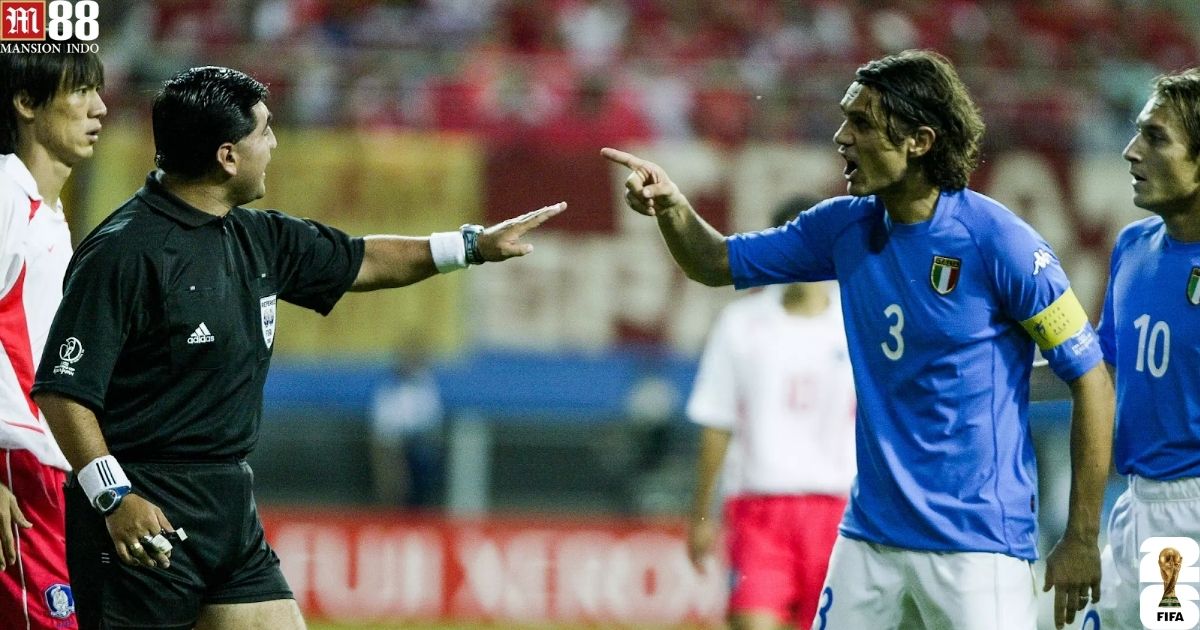
Advancing to the Round of 16, South Korea faced Italy, who were filled with world-class players such as Paolo Maldini, Francesco Totti, and Alessandro Del Piero. The tension of the match escalated from the very beginning.
Just four minutes into the game, referee Byron Moreno awarded a penalty to South Korea after Kim Tae-young fell inside the penalty area.
Many believed that the contact was minimal, and some commentators even labeled it as a “gifted penalty.”
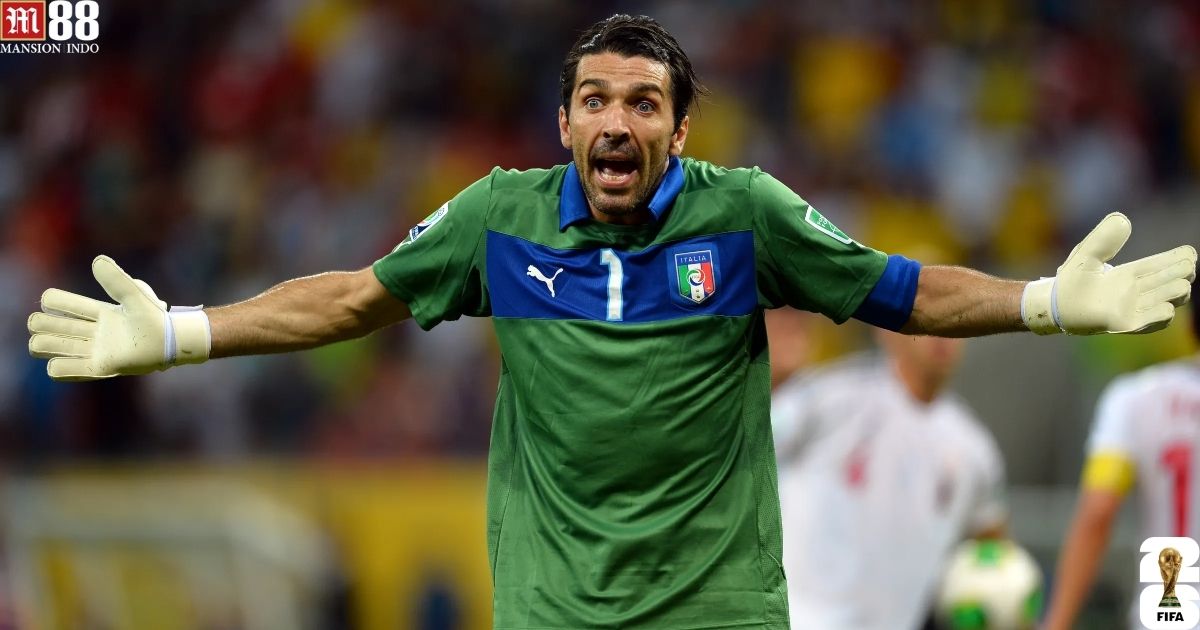
Fortunately for the Azzurri, Gianluigi Buffon performed brilliantly by saving the penalty taken by Ahn Jung-hwan.
Although it did not result in a goal, the decision intensified the atmosphere and placed Italy under significant psychological pressure due to the referee’s decisions.
3. 2002 World Cup Controversy: Second Yellow Card for Francesco Totti
The match remained intense as the score stayed level at 1-1 until the end of normal time, forcing the game into extra time.
At this point, the peak of the drama unfolded. In the 105th minute, Francesco Totti fell inside South Korea’s penalty area after a challenge with a defender.
Instead of awarding a penalty to Italy, the referee accused Totti of diving and issued him a second yellow card.
This decision was highly controversial, as replays indicated clear physical contact.
As a result of the red card, Italy had to continue the match with 10 players during the most critical moments, while South Korea increased their attacking pressure.
4. Damiano Tommasi’s Goal Disallowed
Italy nearly secured victory through a goal scored by Damiano Tommasi during extra time. However, the goal was disallowed for offside.
This decision once again provoked strong reactions from the Italian side. Head coach Giovanni Trapattoni appeared unable to control his emotions on the sidelines and even threw a water bottle.
The disappointment deepened when South Korea ultimately secured victory through a golden goal scored by Ahn Jung-hwan in the 117th minute, which ended Italy’s journey in the tournament.
5. Two Spanish Goals Disallowed in the Quarterfinals
The series of controversies in the 2002 World Cup did not end with the match against Italy. In the quarterfinals, South Korea faced Spain, who featured prominent players such as Fernando Hierro, Raúl González, and Iker Casillas.
Spain applied significant pressure and managed to score two goals that appeared valid, but both were disallowed by the referee.
The first goal was canceled because the assistant referee claimed the ball had crossed the line before being delivered by Joaquín, although replay evidence suggested the ball remained in play.
The second goal was also disallowed due to an alleged foul, even though many observers considered the decision to be excessive.
The match ultimately proceeded to a penalty shootout, which South Korea won 5-3. This result allowed South Korea to make history by reaching the semifinals, although their achievement was overshadowed by strong suspicions and controversy.
To this day, the controversies of the 2002 World Cup continue to be a heated topic of debate. Many believe that the competition was tainted by unfair decisions, and there has even been speculation about match-fixing, although no official legal evidence has ever been revealed.
One thing is certain: these tense moments serve as a reminder that in football, it is not only player skill or managerial tactics that determine outcomes.
Refereeing decisions at crucial moments can alter history, deciding who will be celebrated as winners and who will be left in disappointment.
The 2002 World Cup ultimately left behind two contrasting legacies: on one hand, the euphoria of Asia successfully hosting the world, and on the other, a dark stain that will always remain in the memory of football history.
Latest Article